


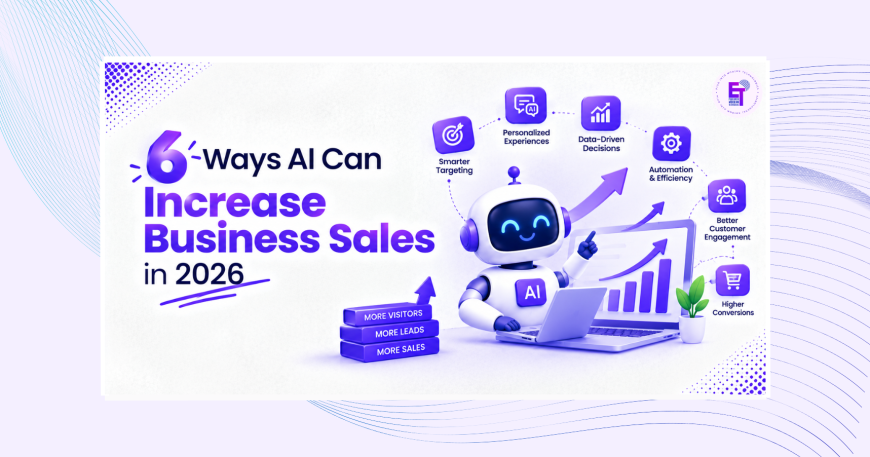
McKinsey estimates generative AI could unlock over a trillion dollars in sales value. That is not a small trend to ignore. Business owners everywhere are asking the same question. Can AI to increase business sales actually work for a company their size? The short answer is yes, and results are measurable across industries.
This blog breaks down six practical, proven ways to make it happen this year. No massive budget or full tech overhaul required.
What Does AI-Driven Sales Growth Actually Mean?
AI-driven sales growth means using automation and predictive data to sell smarter, not just faster. It replaces guesswork with real signals, like buying intent and engagement patterns. The result is fewer wasted hours and more closed deals. Your pipeline starts reflecting reality instead of assumptions.
6 Ways AI Can Increase Business Sales in 2026
1. Smarter lead scoring and prioritization
Not every lead deserves equal attention. AI-powered lead scoring reads website visits, email opens, and company data together. It ranks prospects by how likely they are to buy right now. Teams using this approach often see conversion lifts of twenty to thirty percent. The gain comes simply from chasing the right people first.
2. Personalized outreach at scale
Generic templates rarely convert well anymore. AI can now draft personalized sales outreach that references a prospect’s actual business context. This is one of the clearest AI sales automation benefits available today. A message that feels researched gets read, replied to, and remembered.
3. Predictive sales forecasting
Traditional forecasts rely on gut feeling and stage guesses. AI sales forecasting studies real behavior instead, like response speed and deal activity. This gives leadership a far more accurate revenue picture. Using AI to increase business sales predictability turns budgeting from a guess into a plan. Quarter-end surprises become far less common.
4. Always-on customer engagement
Most leads arrive outside business hours. AI chatbots and virtual assistants capture and qualify these leads instantly. This is where AI sales tools for small business owners genuinely level the playing field. A missed after-hours inquiry no longer means a missed sale.
5. Automated follow-ups and CRM updates
Manual data entry eats hours every single week. AI can log calls, update deal stages, and trigger timely follow-ups automatically. McKinsey’s research on generative AI in B2B growth backs this up. It shows AI-powered workflows can meaningfully lift conversion rates. Reps spend less time on admin and more time actually selling.
6. Conversation intelligence and coaching
Every sales call holds patterns worth learning from. AI analyzes calls to flag objections, buying signals, and coaching opportunities. New hires ramp up faster when this insight replaces guesswork. Average reps become confident closers much sooner, with no extra management hours needed.
Together, these six approaches represent real AI to increase business sales. This is not automation for its own sake. Small businesses adopting two or three of them often see movement within a single quarter. The compounding effect across lead quality, outreach, and follow-through is where gains show.
Where Each AI Approach Creates the Most Value
- Lead scoring → Focuses reps on high-intent prospects
- Personalized outreach → Higher reply and response rates
- Sales forecasting → More accurate revenue planning
- 24/7 engagement → No missed after-hours leads
- Automated CRM updates → Hours saved on admin weekly
- Conversation intelligence → Faster rep coaching and ramp-up
Businesses exploring AI sales tools for small business growth do not need a huge budget. Even one well-chosen tool, applied consistently, can shift results. The mistake most companies make is automating everything at once instead of starting small.
At Emmanuel Tech, we help businesses find which area moves the needle fastest. The right starting point depends on where your team currently loses the most time. A focused first step usually beats a scattered full rollout.
Understanding the full range of AI sales automation benefits helps set realistic expectations too. AI supports your sales team, but it does not replace genuine relationship building. The businesses winning in 2026 pair automation with real human follow-through.
Frequently Asked Questions
- Can small businesses really benefit from AI in sales, or only large teams?
Small businesses often see faster results. Fewer approval layers mean quicker adoption and quicker wins.
- How quickly can a business expect results after adopting AI sales tools?
Most teams notice early movement within four to six weeks. Full impact usually builds over one full quarter, once the data has time to accumulate.
- Does using AI in sales replace the need for a human sales team?
No, it supports the team instead. AI handles research and admin, while people close the actual relationship.
- What is the easiest starting point for a business new to AI in sales?
Lead scoring or automated follow-ups are the simplest entry points. Both require minimal setup and show fast results.
- Do AI sales tools work well for service-based businesses, not just product companies?
Yes, absolutely. Service businesses often benefit even more, since timing and personalized outreach directly influence bookings. Using AI to increase business sales is no longer optional in 2026. Businesses that want to stay competitive need it. Start with one of these six areas, measure the results honestly, and build from there.
